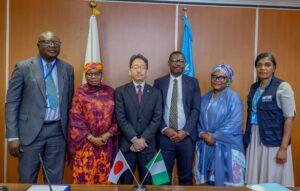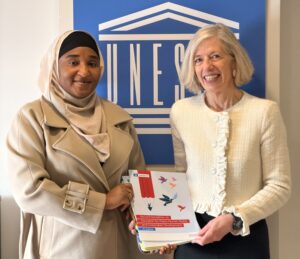

UNESCO’s Natural Sciences Sector plays a central role in advancing the Organization’s mission to build peace, drive innovation, and promote sustainable development. The Sector focuses on two overarching strategic objectives:
- Strengthening Science, Technology and Innovation (STI) Systems
Supporting Member States to develop robust STI policies and institutional frameworks at national, regional, and global levels.
- Promoting International Scientific Cooperation
Facilitating collaboration on critical challenges such as climate change, biodiversity loss, water security, natural hazards, and emerging technologies.
Through its global programmes, ranging from hydrology, ecological sciences, biodiversity research, to basic sciences capacity building, UNESCO fosters scientific excellence and supports countries in creating knowledge societies that are inclusive and resilient.
Nigeria’s Commitment to Science, Technology & Innovation
Since its return to democratic governance in 1999, Nigeria has progressively revitalized its Science, Technology and Innovation (STI) sector, recognizing STI as essential for economic diversification, industrial growth, and sustainable development.
Today, under the Renewed Hope Agenda of the Federal Government, science and innovation are even more central to national development priorities, with reforms focused on:
- Strengthening STI governance and policy implementation
- Expanding research capacity and innovation ecosystems
- Promoting digital transformation and emerging technologies
- Enhancing scientific education and skills development
- Supporting climate resilience, environmental sustainability, and green growth
Nigeria’s long-term development frameworks including the Nigeria Vision 20:2020, the National Development Plan, and current STI modernization efforts underscore the country’s commitment to leveraging science for national prosperity.
UNESCO–Nigeria Collaboration in the Sciences
Nigeria maintains a strong partnership with UNESCO to advance its scientific and innovation priorities through technical assistance, policy support, and capacity development. Key areas of cooperation include:
Revitalization of National STI Policies
UNESCO supported the comprehensive review of Nigeria’s STI policy, beginning with the establishment of an International Advisory Board in 2004.
The revised National STI Policy was officially launched in 2012, strengthening Nigeria’s strategic direction in scientific research and innovation.
Establishment of UNESCO Category 2 Centres in Nigeria
To enhance scientific excellence and regional cooperation, UNESCO has supported the creation of specialized centres, including:
- International Centre for Biotechnology (ICB) – University of Nigeria, Nsukka
- Regional Centre for Integrated River Basin Management (RC-IRBM) – Kaduna
These centres promote advanced research, technical training, and scientific collaboration across Africa.
Ongoing Technical Support and Cooperation
UNESCO continues to work closely with Nigeria on:
- Reinforcing STI institutions and research infrastructure
- Supporting environmental and ecological programmes
- Enhancing water resources management and hydrological research
- Building capacity in climate change adaptation and disaster risk reduction
- Renewing the science component of the Nigeria/UNESCO Special Plan of Cooperation
Towards a Knowledge-Driven and Climate-Resilient Future
Nigeria’s partnership with UNESCO remains vital in accelerating scientific development, fostering innovation, and strengthening the country’s ability to respond to global challenges. Through strategic reforms, renewed political commitment, and international collaboration, Nigeria continues to advance toward an STI ecosystem that is:
- Globally competitive
- Innovation-driven
- Environmentally sustainable
- Capable of powering national development and regional leadership